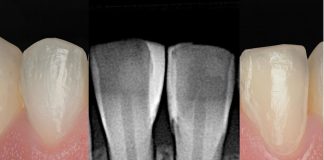
Peg-shaped lateral incisors present a common aesthetic challenge, often disrupting smile harmony. These undersized, conical teeth can be effectively managed with direct composite restorations, offering a conservative, cost-effective, and highly aesthetic solution. Thanks to modern materials and advanced layering techniques, clinicians can achieve seamless, natural-looking results. This article presents a practical approach to restoring peg laterals with composite, highlighting key aspects of smile design, shade selection, and clinical execution.


Fig.1
The retracted view reveals a peg-shaped maxillary left lateral incisor, exhibiting a conical morphology and reduced mesiodistal dimension. A noticeable diastema further compromises the aesthetics, making this case an ideal indication for a direct composite build-up to restore balance, contour, and symmetry within the smile.

Fig.2
A peg lateral isolated under rubber dam with a floss ligature for enhanced gingival retraction. This setup ensures optimal moisture control and visibility—critical for achieving precision in the composite build-up.
The cut-back technique is clearly demonstrated, with composite sculpted to replicate natural mamelon anatomy in the incisal third. This layered approach enhances incisal translucency and contributes to a more lifelike, aesthetic outcome.

Fig.3
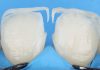
The palatal wall has been successfully built using a transparent strip, acting as a matrix to establish the initial contour and depth of the restoration. This technique ensures accurate anatomical form and provides a solid foundation for the subsequent layering of dentin and enamel composites. The floss ligature and clamp remain in place, maintaining optimal isolation and visibility throughout the procedure.

Fig.4
This image sequence illustrates the step-by-step build-up of both proximal margins using the Unica Proximal matrix system (Polydentia, Mezzovico-Vira, Switzerland) ). The Unica Proximal matrix is carefully adapted to the proximal surfaces, facilitating the creation of precise contact points and natural emergence profiles throughout the composite layering process.
Key Points:
- The matrix ensures excellent adaptation to both mesial and distal walls—essential for reestablishing correct tooth proportions.
- Its anatomical curvature supports precise contouring and significantly reduces the need for extensive finishing.

Fig.5
Both proximal walls have been built using a proximal Unica Proximal matrix system.



Fig.6
The final enamel layer has been placed, completing the anatomical build-up and preparing the restoration for the finishing and polishing protocol.

Fig.7
The finishing protocol began by refining the outline to achieve anatomical shape, followed by surface texturing to mimic natural enamel and ensure seamless integration with adjacent teeth.

Fig.8
The final view after proper finishing and polishing.

Fig.9
The final result of the composite restoration of the peg-shaped lateral incisor is a tooth with a natural shape, smooth surface texture, and excellent color integration with the adjacent teeth. The restoration blends harmoniously into the smile, achieving both aesthetic and functional success.

Fig.10
Another view to show the good integration.

Fig.11
4 months follow-up showed good healing with no complains.
Conclusions
The restoration of peg-shaped lateral incisors with direct composite offers a conservative, aesthetic, and highly predictable solution when executed with careful planning and technique. By ensuring proper isolation, strategic layering, and utilizing advanced tools such as the Unica Proximal matrix (Polydentia, Mezzovico-Vira, Switzerland) and transparent strips, clinicians can sculpt natural anatomy and achieve seamless integration with adjacent teeth. The cut-back technique further enhances the depth and translucency of the final result. As demonstrated, meticulous attention to detail at each step—ranging from the creation of the palatal wall to the final enamel layering—ensures a long-lasting restoration that restores both function and confidence to the patient’s smile.
Bibliography
- Manauta J, Salat Layers An Atlas of Composite Resin Stratification. 2012. Quintessence Pub.
- Nadine Omeish ; Esthetic and functional rehabilitation of peg‐shaped maxillary lateral incisors: clinical recommendations.
- Osama Shaalan – 2024 – https://www.styleitaliano.org/smile-transformation-using-unica-proximal/