

Clinical Case in collaboration with Ali Asadov (DT)
Modern dentistry continues to evolve toward a philosophy where teeth and gingiva are treated as one esthetic unit.
With materials like zirconia, celebrated for its strength, translucency, and soft‑tissue friendliness, clinicians can achieve restorations that honor both white and pink esthetics.
This case highlights how thoughtful planning and expert execution can bring teeth and gingiva into perfect harmony, revealing a smile where durability meets natural beauty.


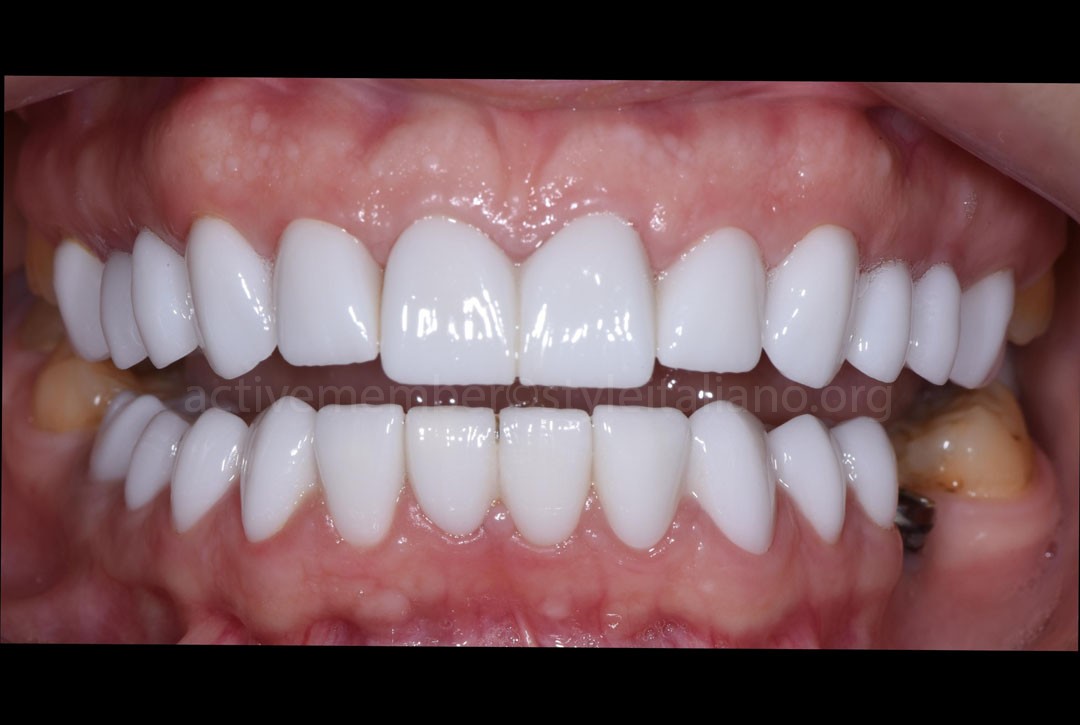
Fig.1
A patient presented to the clinic seeking a more natural and harmonious smile. Clinical examination revealed old opaque, overly white crowns that disrupted both tooth esthetics and gingival balance. Their artificial appearance, combined with compromised positioning from previous restorations, created a clear disharmony between white and pink tissues.
A comprehensive treatment plan was established: removal of the existing crowns, surgical refinement of the gingival architecture, and preparation of the teeth for new zirconia restorations, selected for their lifelike optical qualities and excellent soft‑tissue integration.
The patient accepted the proposed approach, aiming for improved function and a smile where teeth and gingiva blend seamlessly in true Zirconia & Pink Harmony.


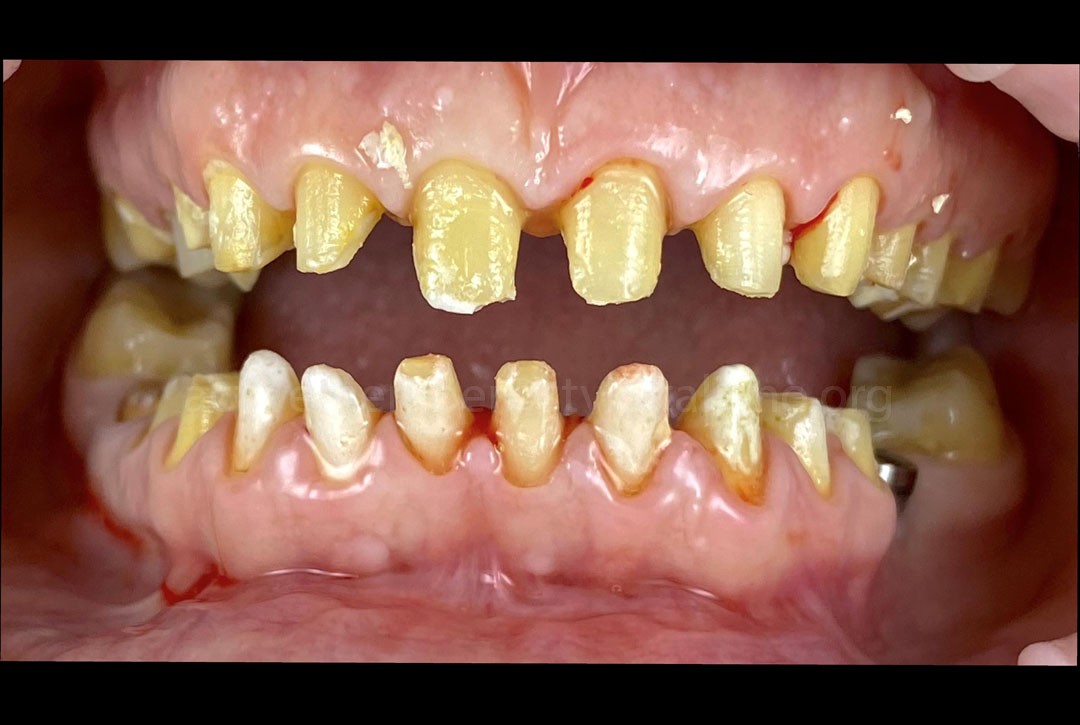
Fig.2
The removal of the old crowns showed the old preparations and the gingiva architecture.
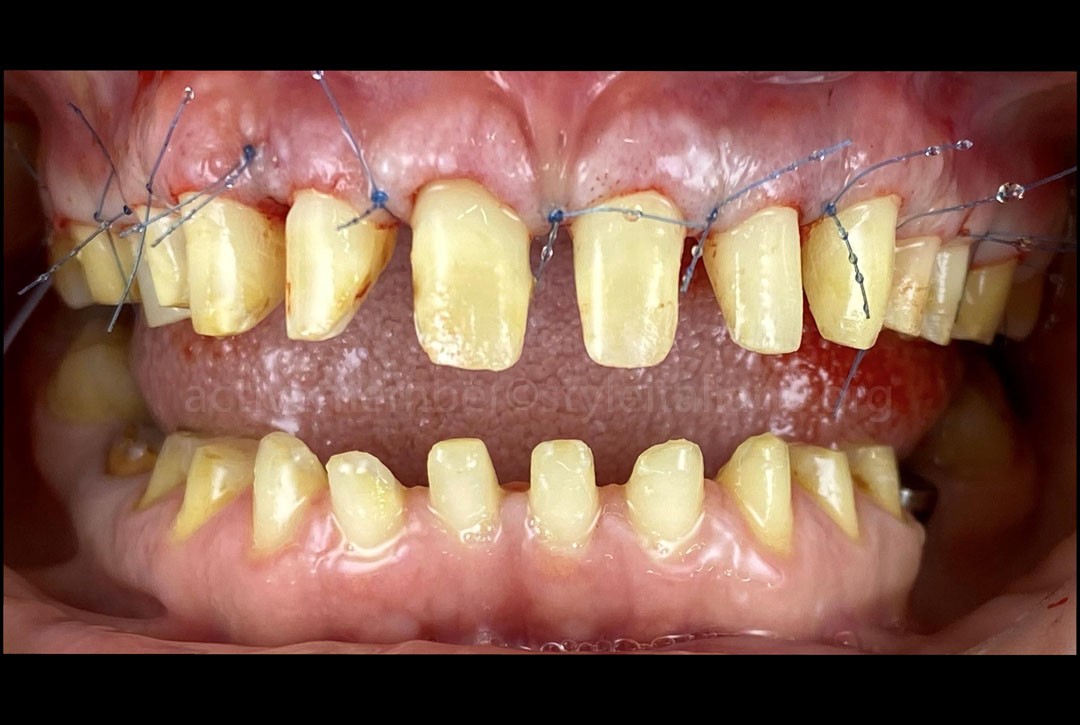
Fig.3
A crown‑lengthening surgery was performed to refine the gingival contours and harmonize the pink esthetics, creating an ideal foundation for the new zirconia restorations.
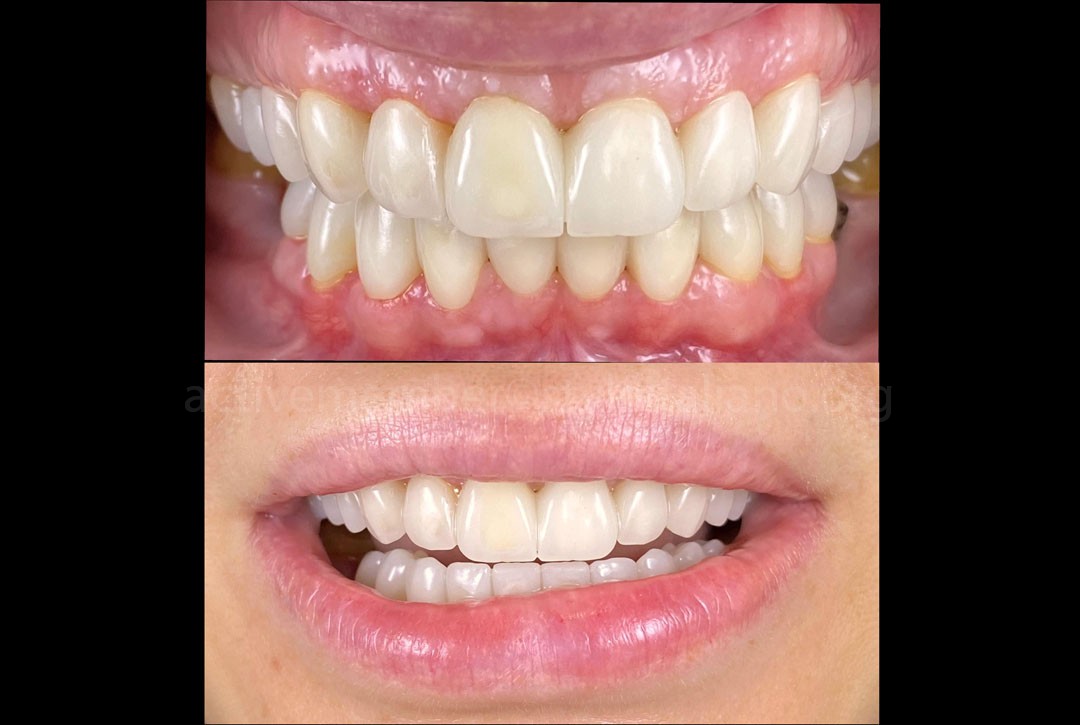
Fig.4
Following the crown‑lengthening surgery, the first provisional restorations were placed to guide the healing process and redefine the shape of the anterior teeth. These provisionals played a crucial role in establishing new contours, correcting previous discrepancies, and harmonizing the emerging gingival architecture. By carefully adjusting their form and proportion, the provisional phase allowed both the soft tissues and the future zirconia restorations to evolve in synergy, setting the stage for a smile where white and pink esthetics develop in perfect balance.
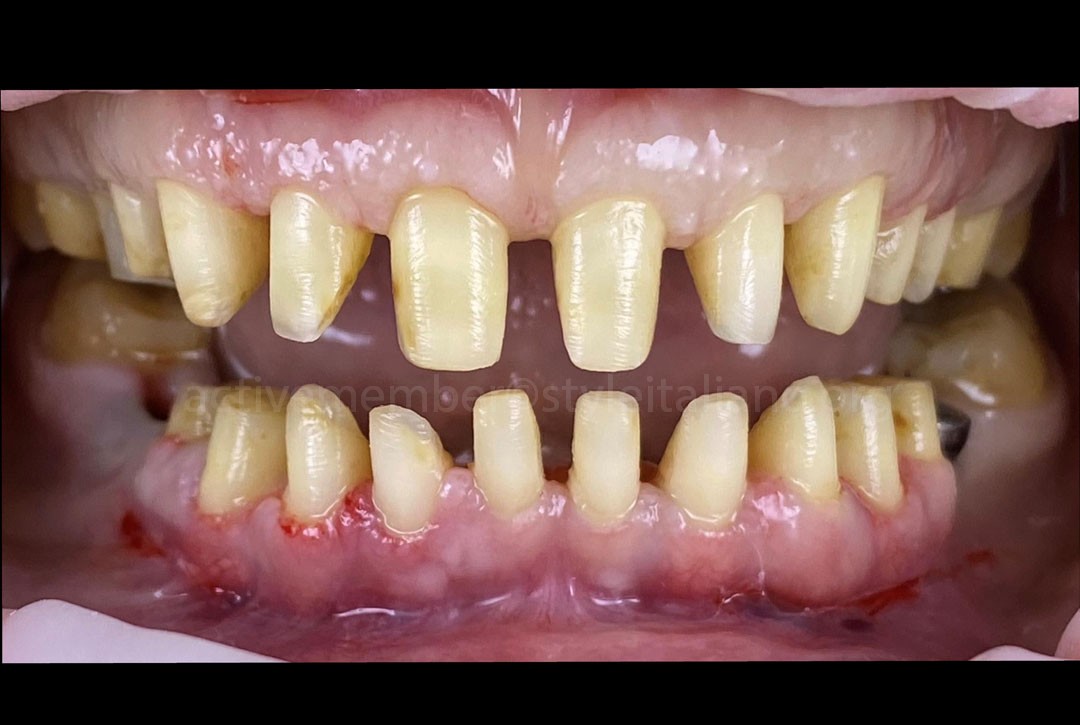
Fig.5
Four months after the provisional phase, the first clinical photograph was taken following removal of the temporaries. At this stage, the gingiva had healed but the papillae remained relatively flat, reflecting the natural maturation process after crown‑lengthening surgery. This moment offered a clear view of the emerging soft‑tissue architecture and allowed precise evaluation of how the provisional contours had guided gingival healing.
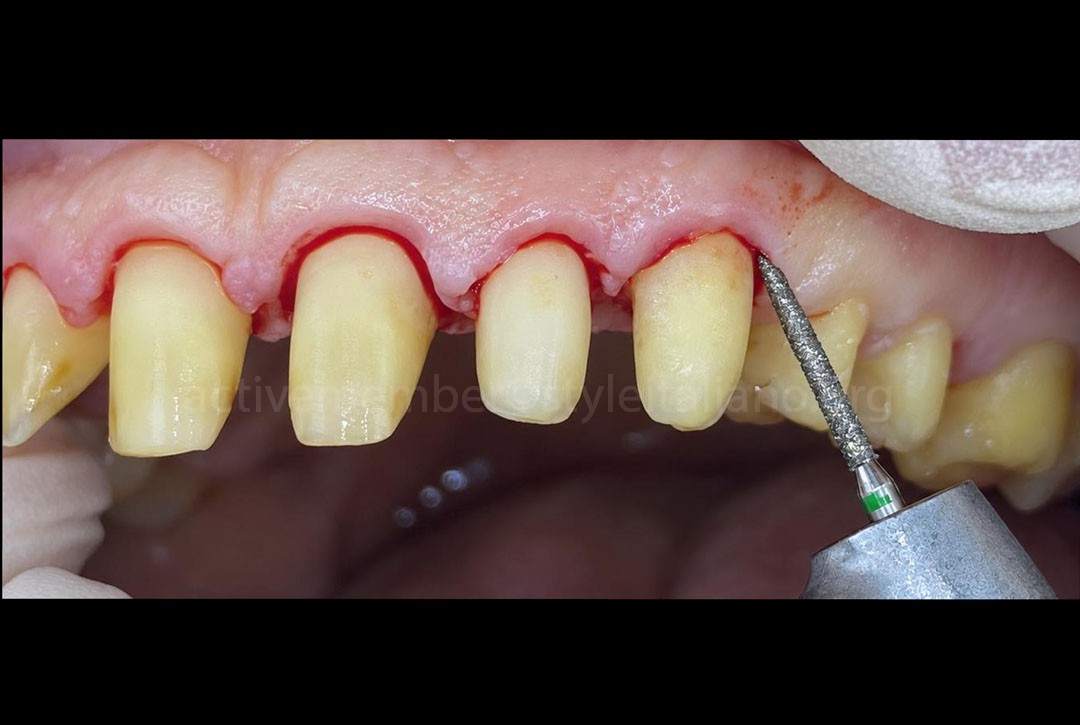
Fig.6
To further enhance the soft‑tissue architecture, a precise gingival recontouring was performed using a fine bur. This step aimed to initiate a new, more harmonious gingival design by refining the marginal contours and encouraging the formation of healthier, more defined papillae. Following the recontouring, new PMMA provisionals were placed to guide the healing process and support the emerging tissue architecture. Their carefully sculpted shapes provided the blueprint for both the gingiva and the future zirconia restorations, ensuring that white and pink esthetics would mature together in balanced harmony.
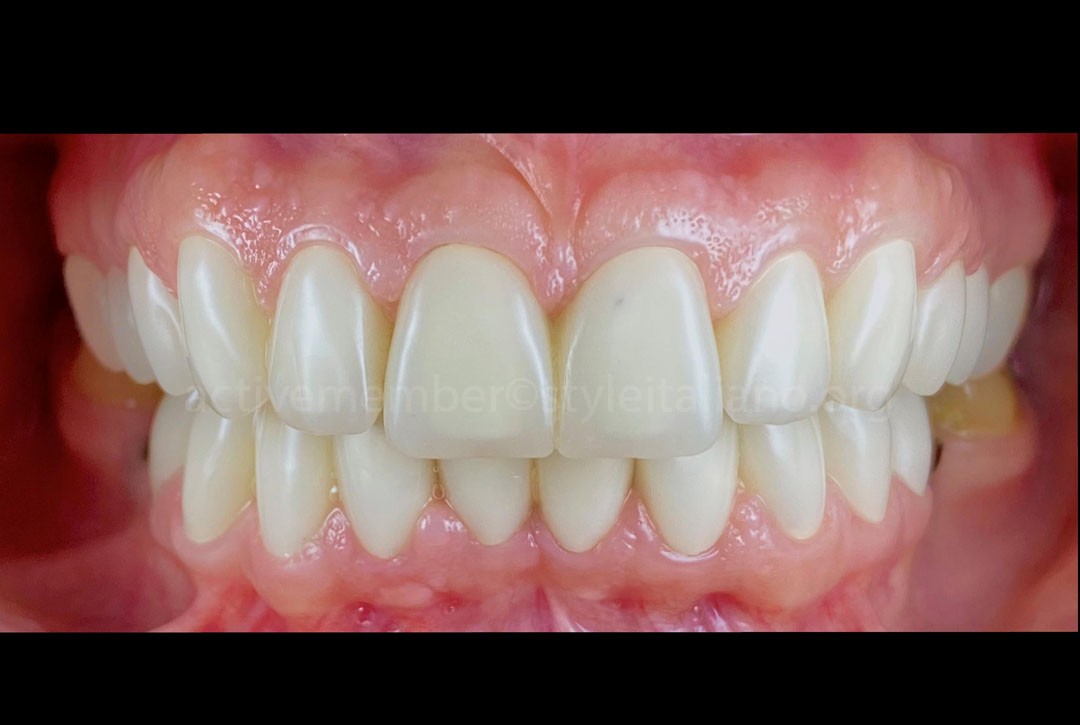
Fig.7
These new PMMA provisionals were intentionally designed with a different shape to contour the gingiva and stimulate the development of new papillae. By modifying their emergence profile and cervical form, the provisionals acted as a soft‑tissue guide, encouraging the gingiva to adapt and mature into a more harmonious architecture. This phase was essential for evaluating the new morphology and ensuring that the gingival response and the future zirconia restorations would develop together in a balanced and predictable manner.
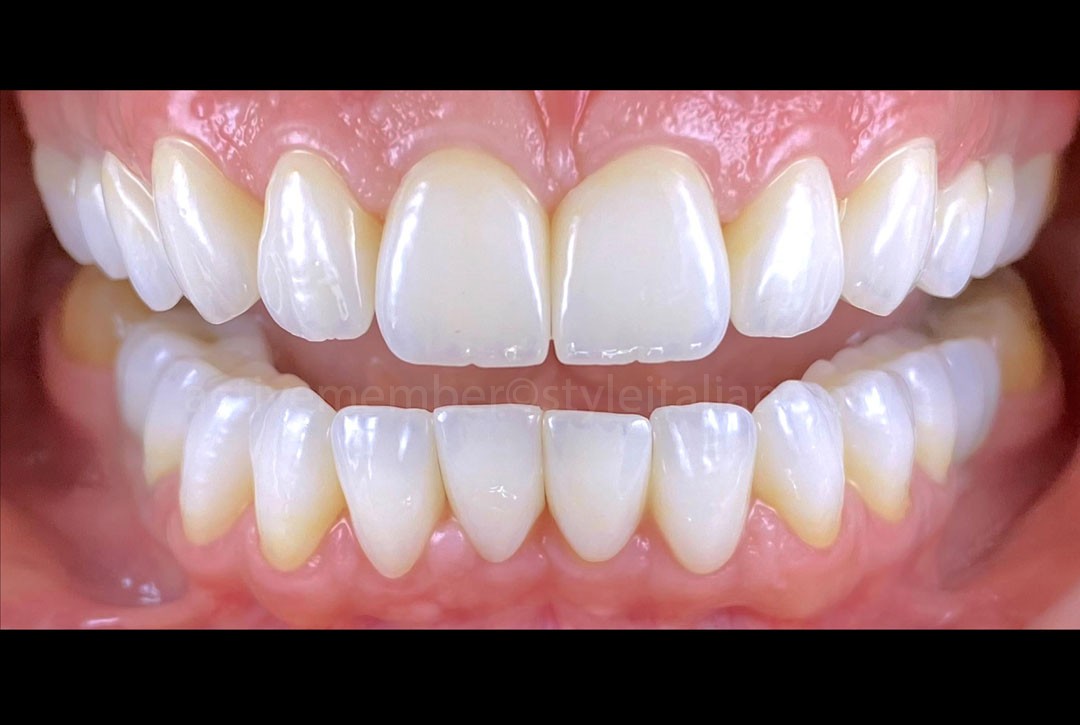
Fig.8
After bonding, the zirconia crowns revealed exceptional esthetic qualities and a remarkably natural integration with the surrounding gingiva. Under different lighting conditions, the restorations displayed lifelike translucency and depth, while the carefully crafted staining and contouring enhanced their realism. Just as importantly, the gingiva responded beautifully: the sculpted margins, guided throughout the provisional phases, embraced the new crowns with healthy, well‑defined architecture.
The Zirconia material used was 3d Pro Zir (Aidite, Qinhuangdao, China).
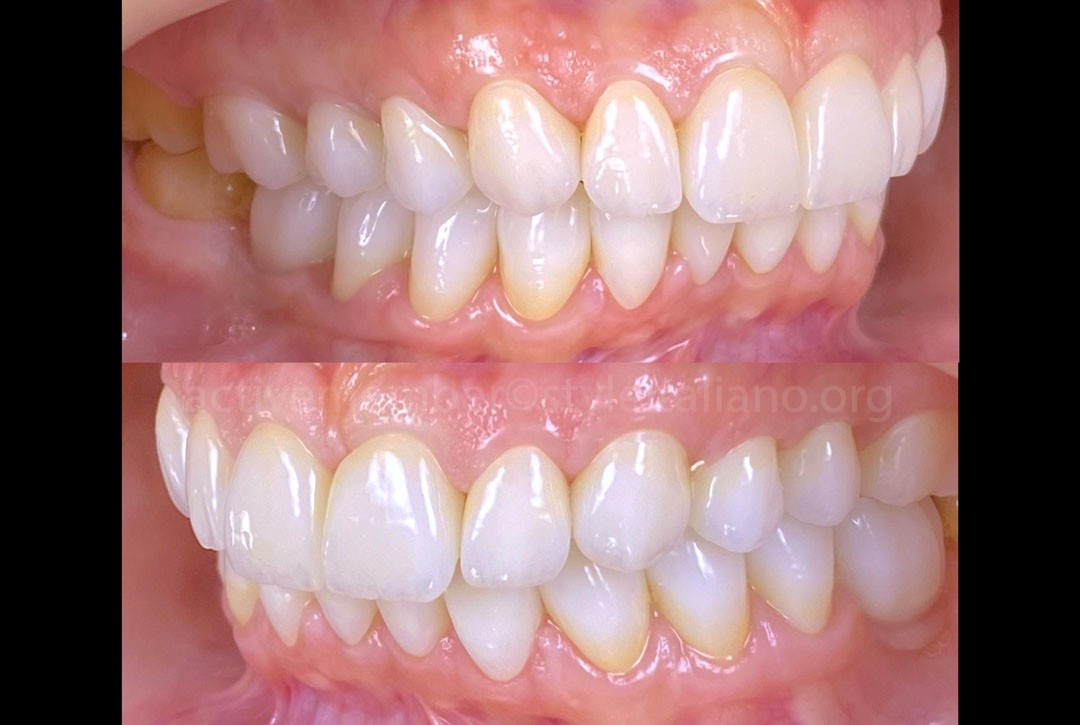
Fig.9
The final zirconia restorations, captured from multiple angles, reveal a flawless integration with both the surrounding dentition and the matured gingival architecture. Their natural contours, calibrated translucency, and balanced emergence profiles create a seamless transition from crown to gum. This harmony between white and pink esthetics reflects the precision of the workflow and underscores the full esthetic success of the treatment, where every detail contributes to a smile that is both refined and naturally coherent.
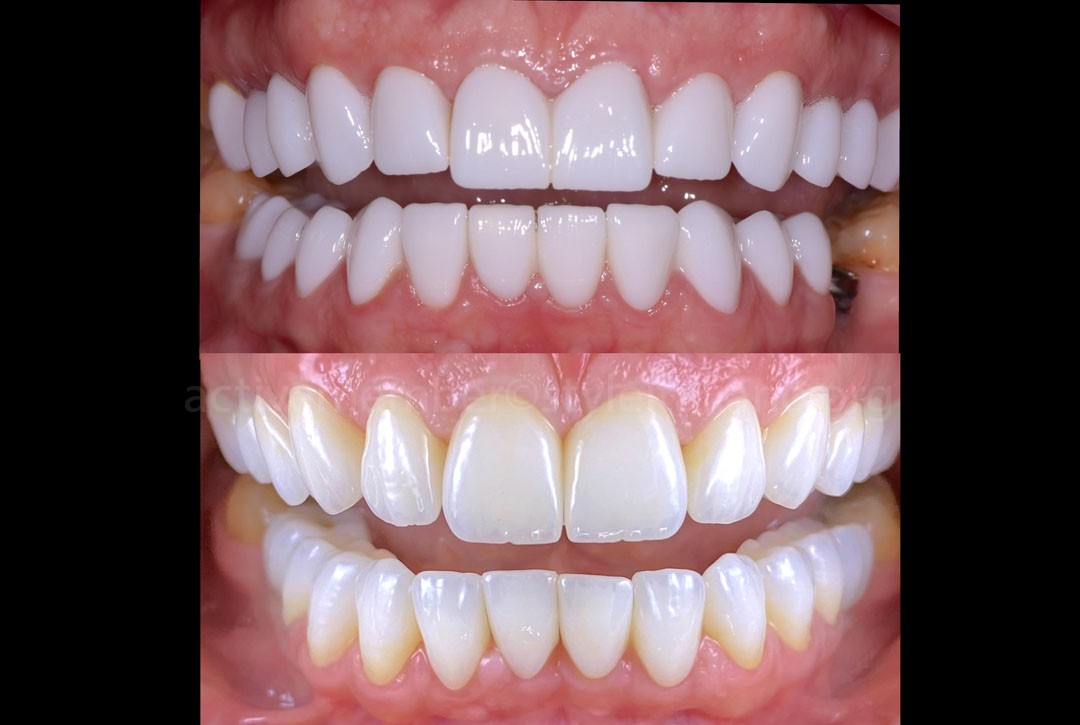
Fig.10
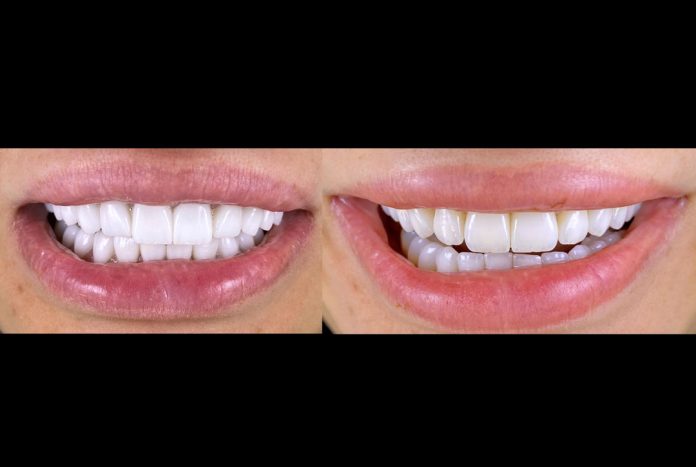
The before and after images clearly illustrate the remarkable transformation achieved in both dental esthetics and gingival harmony. This visual contrast highlights how coordinated restorative design and guided soft‑tissue management can reshape not only the teeth but also the overall gingival environment, resulting in a smile that is cohesive, refined, and truly harmonious.
Conclusions
This case demonstrates how thoughtful planning, precise surgical intervention, and advanced restorative materials can work together to transform both dental esthetics and gingival harmony. Through crown‑lengthening surgery, guided soft‑tissue recontouring, and the strategic use of PMMA provisionals, the gingiva was reshaped into a healthier, more balanced architecture. The final zirconia restorations, supported by this refined foundation, integrated seamlessly with the surrounding tissues, offering natural translucency, ideal contours, and stable pink esthetics.
The before and after images highlight the magnitude of the transformation: an artificial, disharmonious smile evolved into one characterized by balance, coherence, and lifelike beauty. This case underscores the power of combining material science with biologically driven soft‑tissue management to achieve results where durability, precision, and esthetic harmony converge.
Bibliography
- Biologically Oriented Vertical Preparation for Anterior Restorations – Murad Akhundov – 2025
- Zhong, C., & Wang, X. (2024). Advancements and challenges in the application of zirconia ceramics for dental restorations. Ceramics-Silikáty, 68(4), 610–623.
- Nezir, M., Özcan, S., Atilla, A. O., & Evis, Z. (2025). A review of zirconia-based dental materials. Journal of the Australian Ceramic Society, 61, 235–249.