A clinical case by our Community member Dr. Rim Bourgi & Dr Carlos Enrique Cuevas-Suárez
This article and its content are published under the Author’s responsibility as an expression of the Author’s own ideas and practice. Styleitaliano denies any responsibility about the visual and written content of this work.
Over the past four decades, additive manufacturing (AM) has evolved into an accessible, on-demand technology capable of producing geometrically complex structures. Its versatility in design and material use has led to widespread adoption in biomedical research and clinical applications. In dentistry, three-dimensional (3D) printing has successfully overcome many manufacturing challenges associated with complex materials and device structures. Researchers have highlighted its effectiveness in producing dental components, scaffold systems, and various medical devices, reinforcing its growing significance in the biomedical field.
Rubber dam isolation plays a vital role in modern adhesive and esthetic dentistry, ensuring a moisture-free environment, improving bond durability, and minimizing contamination risks from saliva, blood, or hemostatic agents. However, the practical challenges of achieving accurate, time-efficient, and esthetically pleasing isolation—particularly in the anterior region—remain a concern in daily clinical workflows.
Many rubber dam sheets marketed for esthetic procedures offer dual-surface designs: an opaque, textured front and a glossy, slippery back. Traditionally, clinicians mark the dam on the front surface to guide punch holes, which can leave visible stains or compromise the clean appearance once the dam is in place.
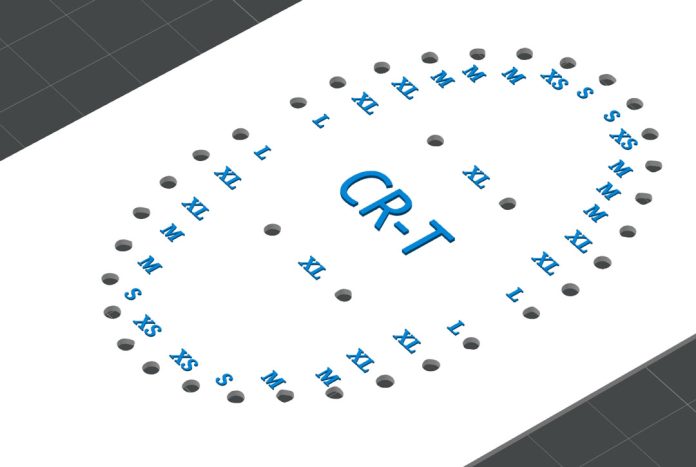
Based on the clinical layout originally proposed by StyleItaliano, the CR-Template was introduced as a digital guide to ensure correct positioning and enhance clinical consistency. This innovative tool assists clinicians in accurately marking the dental dam placement for each tooth, enabling precise and reproducible outcomes. By incorporating this digital solution, the isolation procedure becomes more streamlined and accessible, particularly in complex restorative cases.
The printed CR-Template offers a digitally designed and 3D-printed solution that transforms this process. By leveraging digital design software and precise printing technology, this customizable template provides pre-marked guidelines that can be transferred directly and accurately onto the dam. This eliminates the need for manual marking, reduces chair time, and enhances both the precision and esthetics of rubber dam placement.
This digital innovation allows for reproducible results and user-friendly integration into daily practice, making it an ideal tool for clinicians seeking a reliable, clean, and esthetic approach to isolation—especially in anterior and smile design cases.
This article introduces the printed CR-Template as a digital, everyday solution for efficient and esthetic rubber dam isolation.

Fig.1
In routine clinical practice, achieving proper isolation of the working field often requires the use of multiple tools and materials. However, one of the challenges lies in accurately punching the rubber dam for each individual tooth, a step that can become complex and time-consuming. With advancements in digital technology, the development of a printable template offers a promising solution. This innovation aims to simplify and standardize the isolation procedure, providing clinicians with a user-friendly guide to enhance precision and efficiency in daily practice.


Fig.2
Most rubber dam punches come with five different hole sizes to accommodate various tooth dimensions. With moderate stretching, the smallest hole can expand to approximately 15 mm, the medium hole to about 20 mm, and the largest up to 25 mm. When elongated into an elliptical shape, the hole size increases even further. These punches are designed to minimize bunching of the dam material, thereby reducing the risk of accidental perforation.
For full arch isolation, precise hole placement is essential to avoid uneven coverage—such as excess dam material on one side and an exposed corner on the other. To ensure correct positioning and enhance clinical consistency, the CR-Template was introduced as a digital guide to assist clinicians in accurately marking the dam for each tooth. This innovation ensures repeatability, precision, and efficiency in rubber dam punching and placement. Based on the clinical layout originally proposed by StyleItaliano, the design was transformed into a 3D Standard Tessellation Language (STL) file and 3D-printed, allowing for the creation of a physical, reusable guide. This approach embodies the evolution of modern dentistry toward digitally-driven solutions, enhancing standardization and supporting clinicians in achieving optimal isolation in a streamlined manner.
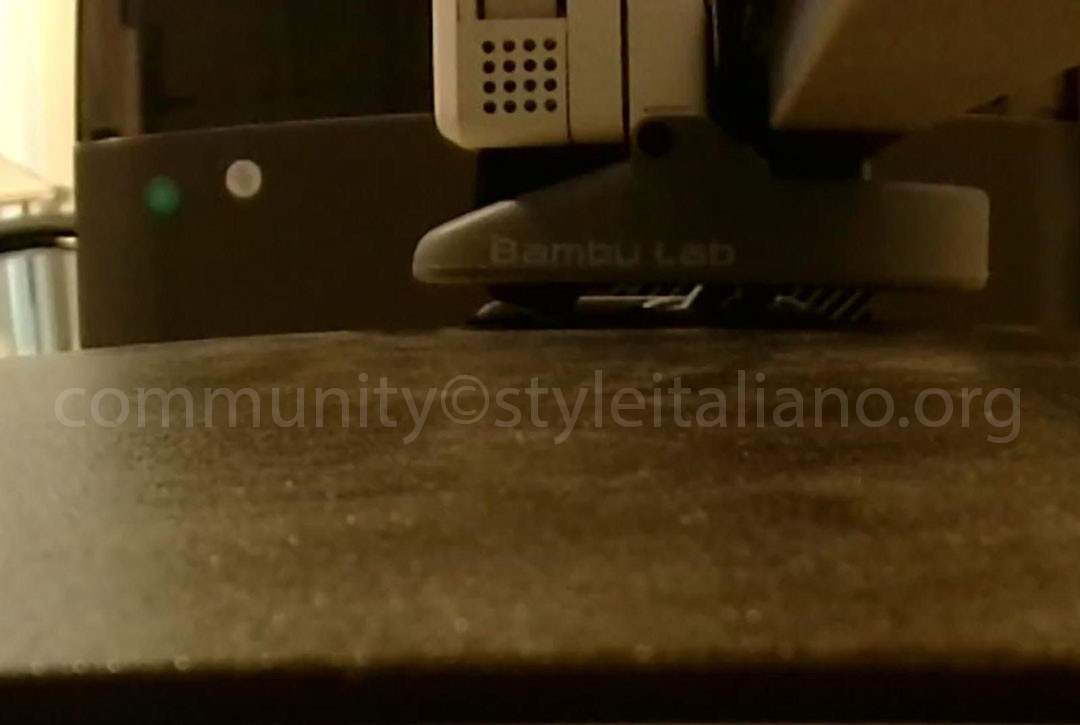
Fig.3
Production of the CR-Template using additive manufacturing.
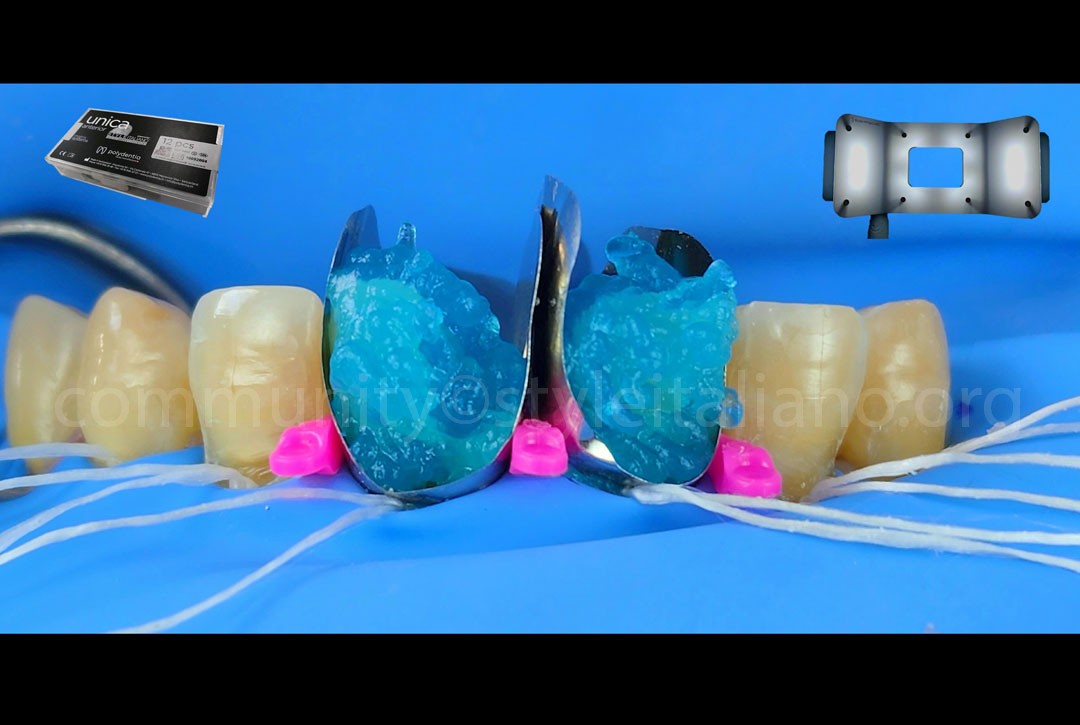
Fig.4
Rubber dams are produced by various manufacturers and are available in a range of colors, including white, green, blue, grey, and violet—with blue and green being the most commonly used in clinical practice. They come in different thicknesses, typically categorized as light, medium, or heavy. The standard size is 15×15 cm. Each rubber dam sheet has two distinct surfaces: one smooth and one matte. When placed intraorally, the smooth surface should be in contact with the oral tissues. To enhance patient comfort and reduce skin irritation, it is advisable to apply a hydrophilic base between the patient’s skin and the rubber dam. As rubber dams are made from natural latex rubber, they should be stored in a refrigerator to preserve their physical properties. When stored correctly, they can maintain their quality and effectiveness for up to one year.
A medium-thickness blue rubber dam (Nic Tone; MDC Dental, Zapopan, Jalisco, Mexico) was used to isolate the anterior region. The CR-Template was employed here for better rubber dam placement.
This picture was captured with the help of the Smile Lite MDP2 (Smile Line, Switzerland).
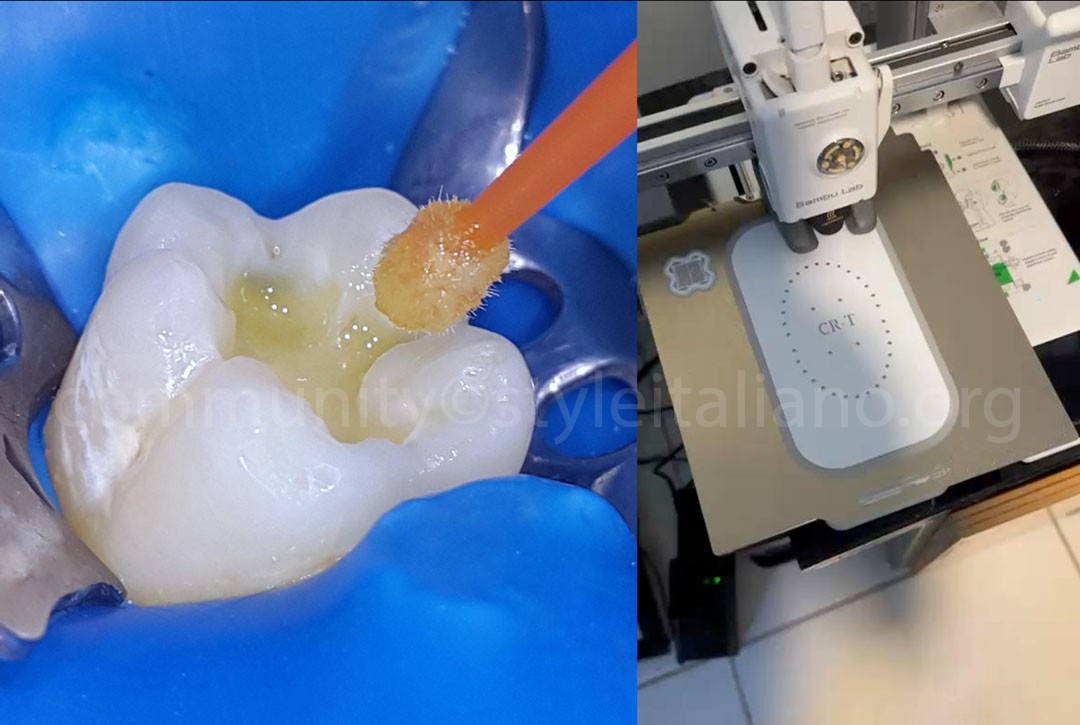
Fig.5
The posterior tooth was isolated by punching a molar-sized hole using the CR-Template as a digital guide.


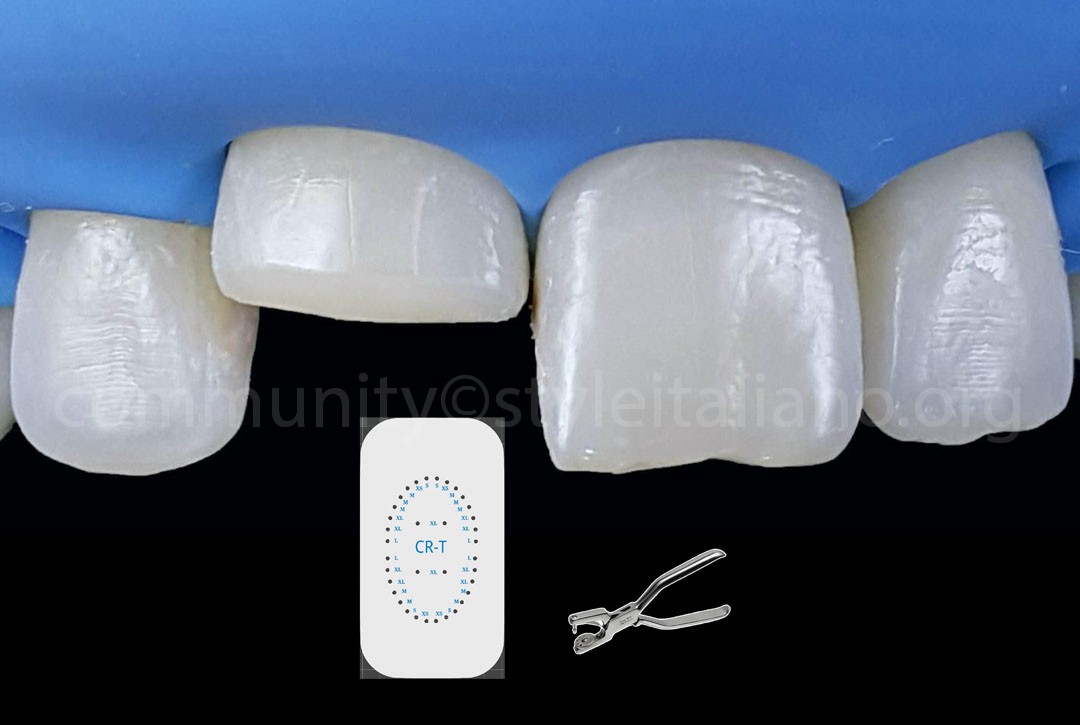
Fig.6
The anterior teeth were isolated by punching the six upper anterior holes using the CR-Template as a digital guide.
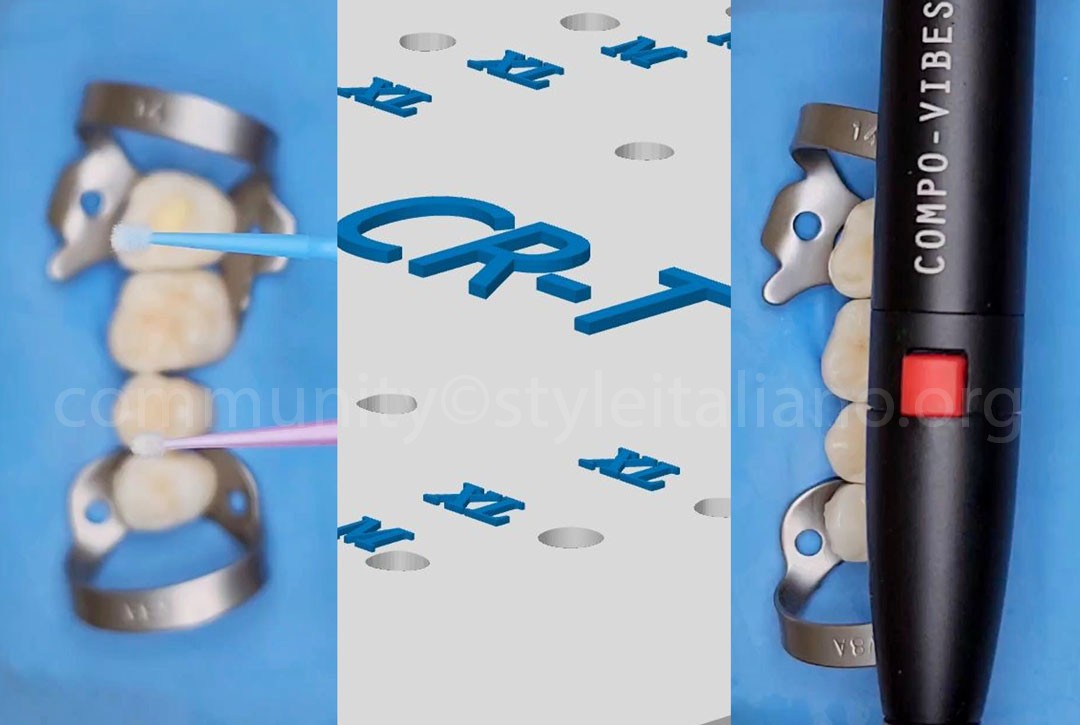
Fig.7
A video was created using the CR-Template and the MDP device (Smile Line, Switzerland) to showcase the application of the bonding, providing a clear visual guide for clinicians.
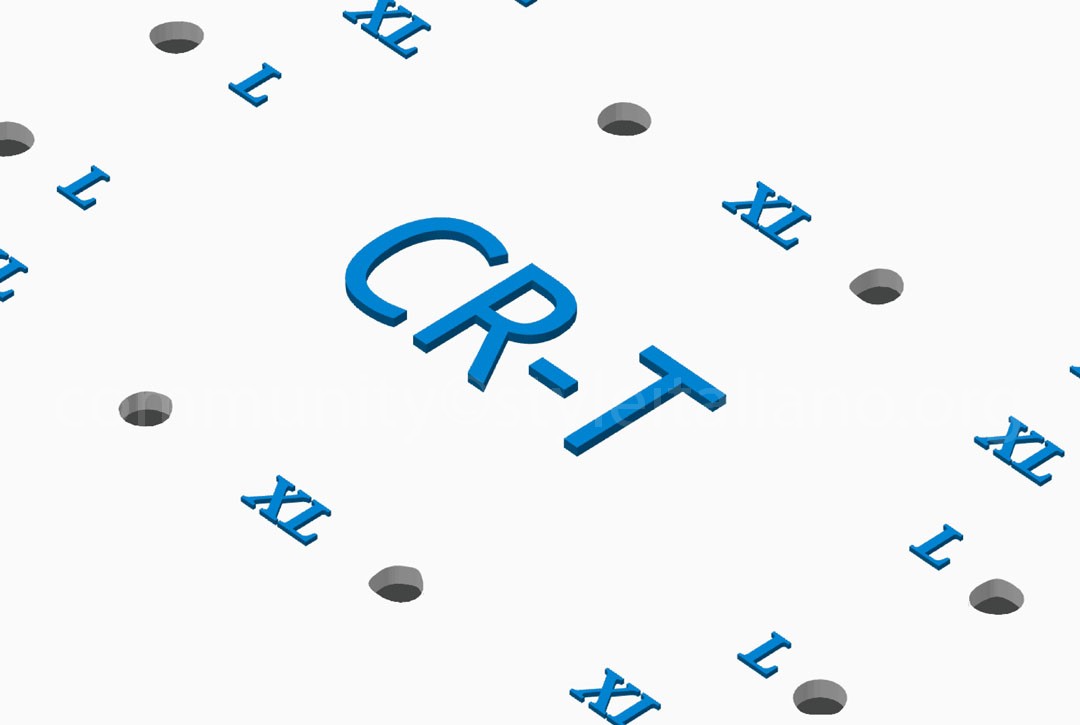
Fig.8
Thanks to the StyleItaliano design concept, which inspired clinicians to think beyond the conventional and embrace an expanding digital solution in daily practice. That’s why we took the opportunity to transform this two-dimensional (2D) idea into a 3D concept—creating a printed, reusable digital guide that enhances precision, repeatability, and efficiency in rubber dam isolation.
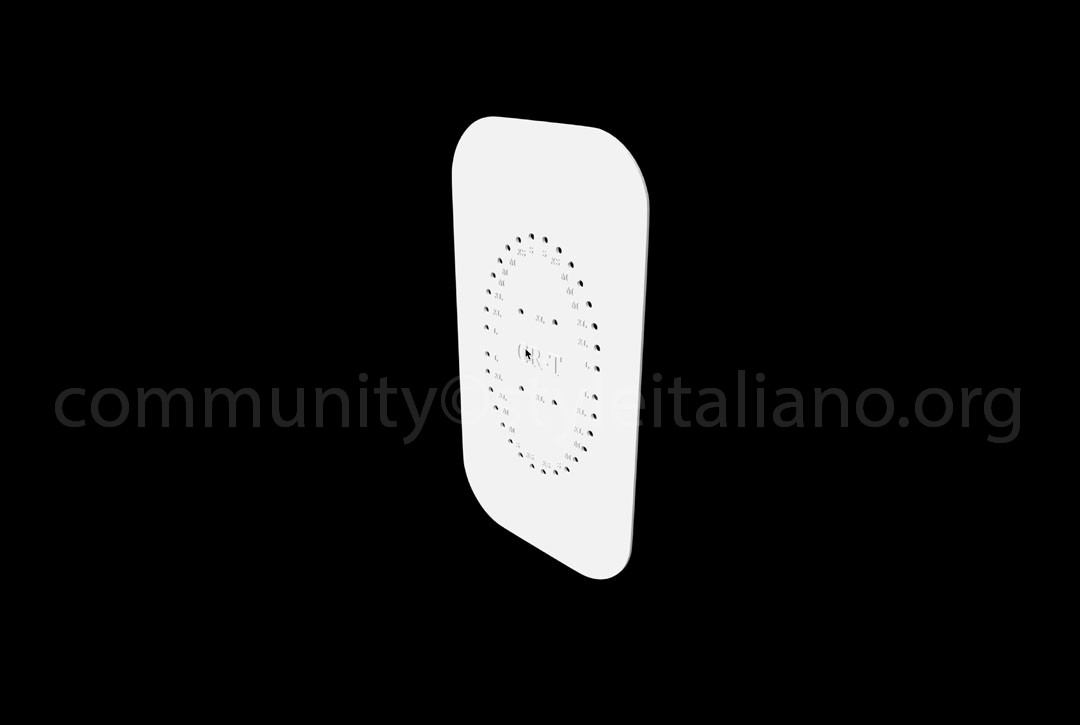
Fig.9
Displayed here is the STL file of the CR-Template, inspired by the StyleItaliano philosophy and design principles.
Conclusions
The CR-Template represents a significant step forward in modern dental practice by merging traditional isolation techniques with innovative digital tools. By transforming a 2D conceptual design into a 3D-printed, reusable guide, this solution offers clinicians a practical, precise, and repeatable approach to rubber dam placement. As dentistry continues to evolve in the digital era, tools like the CR-Template not only improve clinical workflow but also enhance the quality of patient care through better isolation, visibility, and bonding outcomes. This advancement reflects the growing need for smart, user-friendly digital solutions that adapt to the dynamic nature of everyday dentistry.
Bibliography
- https://styleitaliano.org/rubber-dam-perforations/
- Bourgi R, Cuevas‐Suarez CE, Devoto W, Monjarás‐Ávila AJ, Monteiro P, Kharma K, Lukomska‐Szymanska M, Hardan L. Effect of contamination and decontamination methods on the bond strength of adhesive systems to dentin: A systematic review. Journal of Esthetic and Restorative Dentistry. 2023 Dec;35(8):1218-38.
- Dabbagh S, Hardan L, Kassis C, Bourgi R, Devoto W, Zarow M, Jakubowicz N, Ghaleb M, Kharouf N, Dabbagh M, Arbildo-Vega HI. Effect of intraoral humidity on dentin bond strength of two universal adhesives: an in vitro preliminary study. Coatings. 2022 May 23;12(5):712.
- Bourgi R, Kharouf N, Cuevas-Suárez CE, Lukomska-Szymanska M, Haikel Y, Hardan L. A literature review of adhesive systems in dentistry: Key components and their clinical applications. Applied Sciences. 2024 Sep 10;14(18):8111.
- Wong MC, Zou J, Zhou X, Li C, Wang Y. Rubber dam isolation for restorative treatment in dental patients. Cochrane Database of Systematic Reviews. 2021(5).
- Manjarrés V, Méndez C, Gutmann JL. Stabilization of the Dental (Rubber) Dam-Historical Perspectives. Journal of the history of dentistry. 2025;73(1):25-34.
- Thirugnanasamabandam A, Nallamuthu R, Renjit M, Gnanasagaran CL. 3D‐printed PLA/PMMA polymer composites: A consolidated feasible characteristic investigation for dental applications. Polymer Engineering & Science. 2024 Sep;64(9):4019-31.