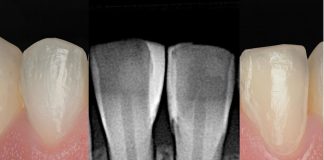
A clinical case by our Community member Dr. Mohammed Haji
This article and its content are published under the Author’s responsibility as an expression of the Author’s own ideas and practice. Styleitaliano denies any responsibility about the visual and written content of this work.
Direct composite restorations in the anterior region remain clinically demanding due to the need to accurately reproduce natural tooth morphology, optical behavior, and surface characterization while ensuring long-term esthetic stability. Despite continuous advancements in composite resin systems and adhesive technologies, treatment outcomes remain highly technique-sensitive and dependent on a structured clinical workflow.
This case report presents a standardized, step-by-step protocol for anterior direct composite restoration, emphasizing optimal isolation, biologically driven layering strategies, refined finishing procedures, and systematic quality assessment to achieve predictable, efficient, and naturally integrated esthetic outcomes.

Fig.1
A 26-year-old dental nurse presented to the clinic with a complaint regarding her smile.

Fig.2
Proper isolation using a rubber dam is fundamental for successful adhesive procedures. The rubber dam provides absolute moisture control, prevents salivary contamination, improves visibility, protects soft tissues, and creates an optimal environment for bonding. This critical step ensures predictable adhesion and longevity of the restoration while allowing the clinician to work efficiently without interruption.

Fig.3
The foundation of natural-looking anterior restorations begins with proper dentin layer placement. Using a dentin-shade composite, mamelons were carefully created to replicate the natural anatomy of the tooth. This step reduces the dark spaces visible from the incisal edge and establishes the internal characterization that will be visible through the translucent enamel layer. The dentin shade provides the primary color foundation, while brighter shades are strategically placed to enhance luminosity and create depth.

Fig.4
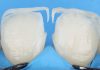
During the shaping stage, careful attention was paid to identifying and correcting any irregularities. Symmetry between the central incisors was continuously evaluated to ensure harmonious proportions and balanced esthetics. The tooth contours, incisal edge positions, and overall morphology were refined to achieve bilateral symmetry. This step requires frequent evaluation from multiple angles and may involve minor adjustments to perfect the form before moving to the finishing stage. A transparent strip was used to accurately form the proximal wall, and the pull-through technique was repeated as needed to refine the contact area.

Fig.5
Final occlusal verification was performed to ensure proper functional contacts and the absence of interferences. The occlusion was evaluated in centric relation, lateral excursions, and protrusive movements. Any necessary occlusal adjustments were made to ensure long-term stability and patient comfort. Proper occlusal harmony helps prevent restoration fracture and supports functional longevity.

Fig.6
The final frontal view of the patient’s smile demonstrates the successful esthetic outcome achieved through systematic composite restoration. The restorations exhibit natural translucency, appropriate characterization, harmonious proportions, and seamless integration with the surrounding dentition. The patient’s smile shows enhanced esthetics while maintaining a natural, lifelike appearance that respects individual facial characteristics.

Fig.7
Phonetic evaluation was performed to determine the exact position of the smile line and the incisal edge.

Fig.8
Before and after.
Conclusions
This clinical case demonstrates that anterior direct composite restorations can be transformed into a predictable and reproducible procedure through the application of a structured, step-by-step clinical protocol. By adhering to a task-oriented workflow that prioritizes effective isolation, biologically driven layering strategies, controlled characterization, and meticulous finishing and polishing, clinicians can consistently achieve highly esthetic outcomes within efficient clinical timeframes.
Respecting each procedural phase—from diagnostic assessment and contrast-based evaluation to final occlusal verification—plays a critical role in optimizing both the quality and longevity of the restoration. When contemporary composite materials are combined with systematic clinical execution and precise anatomical detailing, direct anterior restorations can achieve seamless integration with the natural dentition while delivering durable esthetic and functional performance. The protocol presented offers a reliable framework for minimizing variability and enhancing predictability in anterior adhesive restorative dentistry.
Bibliography
- Hardan L, Bourgi R, Kharouf N, Mancino D, Zarow M, Jakubowicz N, Haikel Y, Cuevas-Suárez CE. Bond strength of universal adhesives to dentin: A systematic review and meta-analysis. Polymers. 2021 Mar 7;13(5):814.
- Devoto W, Saracinelli M, Manauta J. Composite in everyday practice: how to choose the right material and simplify application techniques in the anterior teeth. Eur J Esthet Dent. 2010 Mar 1;5(1):102-24.
- Manauta J, Salat A. Layers, An atlas of composite resin stratification. Quintessence Books, 2012.
- Dietschi D. Optimizing smile composition and esthetics with resin composites and other conservative esthetic procedures. European Journal of Esthetic Dentistry. 2008;3(1):14-29.
- Devoto W, Pansecchi D. Composite restorations in the anterior region: clinical and aesthetic performances. Practical Procedures & Aesthetic Dentistry: PPAD. 2007 Sep 1;19(8):465-70.