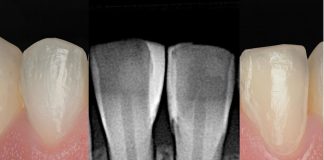
A clinical case by our Community members Dr. Kazam Mahmood
This article and its content are published under the Author’s responsibility as an expression of the Author’s own ideas and practice. Styleitaliano denies any responsibility about the visual and written content of this work.
Diastema closure can be a daunting process. From following protocols to meeting aesthetic expectations, the procedure is technically demanding—even for experienced clinicians. Traditional methods involve a multi-step workflow: consultation, mock-ups, wax-ups, laboratory work, and finally, the treatment itself.
Thanks to an innovative approach developed by Jordi Manauta, diastema closures are now simpler and more predictable, even in complex cases. The Front Wing technique offers several advantages:
• Requires one single visit, eliminating the need for laboratory work and additional appointments
• Facilitates aesthetic outcomes with greater control over emergence profiles and buccal contours
• Allows for the use of single or multiple composite shades and systems
• Makes achieving flush and tight proximal contacts significantly easier
• A fast and user-friendly technique


Fig.1
The patient presented complaining about a large diastema and prominent central incisors, with a significant upcoming event adding urgency to the treatment. After discussing the available options, orthodontic treatment was deemed unfeasible. It was therefore decided to proceed with diastema closure using composite resin only.

Fig.2
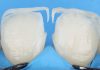
On the left, enamel shades EM and EL. On the right, GC injectable A2 and body shade A2.

Fig.3
Conventional isolation was achieved using floss ligatures for gingival retraction and PTFE tape to protect adjacent teeth.

Fig.4
An occlusal view confirmed the challenging alignment of the central incisors, making space management crucial. These aspects, as you will see, are not an issue when using the Front Wing technique.

Fig.5
The enamel surfaces were sandblasted with 27 µm aluminum oxide to remove biofilm.

Fig.6
Etching of the entire surface.

Fig.7
The bonding agent was applied to ensure even coverage.

Fig.8
For the buccal layer, Enamel EM was used. The single increment was roughly contoured to achieve correct proportions.



Fig.9
To manage the interproximal space, a TOR VM matrix and wedge were placed. A small drop of flowable composite, followed by heated paste composite, ensured a tight and smooth proximal contact.

Fig.10
Initial shaping was done to define primary anatomy.

Fig.11
Rough finishing was followed by the first polish using Soflex discs.

Fig.12
Right after rubber dam removal.

Fig.13
The immediate result showed excellent form, although slight dehydration led to temporary shade discrepancy.

Fig.14
At the two-week check-up, papillae had re-established, shade had normalized, and the result was re-polished using ASAP wheels.

Fig.15
Occlusal view demonstrating palatal anatomy and flush interproximal contacts.

Fig.16
Final result.
Conclusions
With advances in materials and techniques, clinicians now have the tools to achieve lifelike, predictable outcomes using minimally invasive protocols. The Front Wing technique is a fast and easy means to close diastemata with an exceptional aesthetic design. While case selection and material choice remain important, the technique dramatically reduces chair-time and simplifies execution.
This case demonstrates its clinical effectiveness and patient satisfaction.
The author would like to give thanks to Ahmed Samer Tadfi for teaching this technique so fluently. Thank you also to Jordi and Walter for their time and expertise in advancing restorative dentistry.
Bibliography
- Urkande NK, Mankar N, Nikhade PP, Chandak M, Ikhar A, Patel A. Anterior Matrix Systems for Composite Restorations: A Review. Cureus. 2023 Apr 4;15(4):e37145.
- Manauta J, Salat A, Devoto W, Putignano A. Layers 2: Direct Composites: the Styleitaliano Clinical Secrets. Quintessence, 2022.
- Ahmed AJ, Nichani AS, Venugopal R. An Evaluation of the Effect of Periodontal Biotype on Inter-Dental Papilla Proportions, Distances Between Facial and Palatal Papillae in the Maxillary Anterior Dentition. J Prosthodont. 2018 Jul;27(6):517-522.