Minimally invasive approaches have become the standard in anterior esthetic dentistry, aiming to preserve sound tooth structure while achieving natural and harmonious results. Direct composite restorations allow precise control of shape, color and optical properties, making them a predictable solution for esthetic rehabilitation.
A substrate-driven approach, combined with appropriate material selection and stratification techniques, is essential to achieve optimal integration and long-term clinical success.

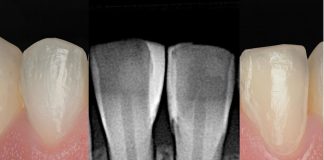
Fig.1
Initial clinical situation. Disharmony in shape, color, and proportions of the maxillary anterior teeth.

Fig.2
Pre-operative close-up view showing texture and value discrepancies.

Fig.3
Rubber dam isolation for moisture control.

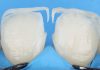
Fig.4
Minimally invasive enamel preparation performed to enhance adhesion and create space for the restorative material. A silicone key was used to guide the restoration of the incisal edge.

Fig.5
Substrate conditioning and refinement of the preparation to optimize the integration of the composite restorations. The incisal edge was built guided by the silicone key.

Fig.6
Light-cured composite resin (Vittra APS, FGM, Joinville, Brazil) was selected for the restorative procedure. A translucent shade was selected to enhance incisal translucency, mimicking natural enamel optical properties and contributing to a more youthful appearance.


Fig.7
Incremental stratification of composite resin. In tooth 11, a high-opacity dentin-shade composite (Vittra APS DA2, FGM, Joinville, Brazil) was applied to effectively mask the darker underlying substrate and was covered by the enamel shade. In tooth 21, only enamel-shade composite (Vittra APS E1, FGM, Joinville, Brazil) was used to preserve the natural chroma and translucency of the tooth.

Fig.8
Finishing and polishing procedures.

Fig.9
Post-operative intraoral view.

Fig.10
Final smile with improved esthetics.

Fig.11
Before and after comparison with direct composite restorations.
Conclusions
This clinical case demonstrates that a minimally invasive, additive approach using direct composite resin can effectively restore esthetics in the anterior region while preserving sound tooth structure.
A careful analysis of the substrate, combined with a stratification protocol based on optical principles, allowed the clinician to control opacity, translucency and chroma, achieving a natural and harmonious integration with the adjacent dentition.
The use of a high-opacity dentin shade to mask discoloration, together with enamel and translucent shades to reproduce natural light dynamics, proved to be essential for obtaining a predictable and biomimetic result.
Direct composite restorations, when properly planned and executed, represent a reliable and conservative solution for anterior esthetic rehabilitation.
Bibliography
- Dietschi Didier D, Fahl N Jr. Shading concepts and layering techniques to master direct anterior composite restorations: an update. J Adhes Dent. 2016;18(6):427–441.
- Hardan L, Bourgi R, Cuevas-Suárez CE, et al. Effect of different application modalities on the bonding performance of adhesive systems to dentin: a systematic review and meta-analysis. Polymers. 2023.
- Vanini Lorenzo L. Light and color in anterior composite restorations. Pract Periodontics Aesthet Dent. 1996;8(7):673–682.
- Magne Pascal P, Belser UC. Bonded Porcelain Restorations in the Anterior Dentition: A Biomimetic Approach. Chicago: Quintessence; 2002.
- Terry Douglas A. DA. Direct applications of a nanocomposite resin system: part 1—The evolution of contemporary composite materials. Pract Proced Aesthet Dent. 2004;16(6):417–422.