


A clinical case by our Community member Dr. Prjeen Bazeed
This article and its content are published under the Author’s responsibility as an expression of the Author’s own ideas and practice. Styleitaliano denies any responsibility about the visual and written content of this work.
Achieving natural esthetics involves more than selecting the correct shade.
Shape, surface texture, and the way light interacts with the teeth all contribute to the overall perception of the smile. Even small modifications in these elements can significantly influence the final result.
Direct composite veneers offer a conservative approach to enhancing smile esthetics while preserving healthy tooth structure. This clinical case demonstrates how careful attention to morphology, texture, and optical integration can help create a harmonious and natural appearance.

Fig.1
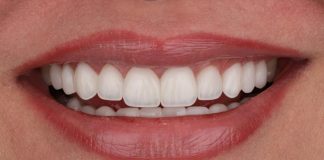
A young female patient presented to the clinic seeking improvement in the appearance of her smile. Clinical examination revealed irregular tooth shape, disproportional anterior teeth, and a lack of esthetic balance. A conservative treatment approach using direct composite restorations was selected to enhance the smile while preserving healthy tooth structure.

Fig.2
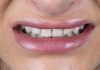
The retracted intraoral view revealed discrepancies in tooth proportions and incisal morphology. Variations in color and surface characteristics were also evident, contributing to the overall lack of esthetic integration within the anterior segment.

Fig.3
A visual treatment proposal was developed to assess tooth shape, proportions, and overall smile harmony before the restorative phase.

Fig.4
Rubber dam isolation with floss ligatures was established to provide effective moisture control, gingival retraction, and a clean operative field prior to the restorative procedure.

Fig.5
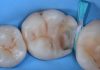
Following isolation, the enamel surfaces were conditioned through air abrasion and phosphoric acid etching, creating a clean and receptive substrate for the adhesive restorative procedure.

Fig.6
The palatal shell was built freehand using Clear Enamel CE composite and a transparent matrix strip, establishing the initial palatal contour for the subsequent layering procedure.

Fig.7
An SW dentin shade composite was used to establish the internal anatomy and restorative volume. Mamelons were sculpted individually, while selective extension of the same material toward the incisal edge was used to reproduce the halo effect and enhance optical depth.

Fig.8
A clear tint was used to fill the spaces between the mamelons and halo areas, while selective application of blue, white, and ochre tints was performed to enhance internal characterization and optical depth.

Fig.9
The final enamel layer was adapted using a transparent Mylar strip to refine the proximal contours, establish smooth line angles, and optimize the contact area.

Fig.10
The final enamel layer was completed and polymerized, revealing the final shape of the restorations prior to finishing and polishing.

Fig.11
Morphological reference lines were drawn after polymerization of the final enamel layer to guide the refinement of line angles, developmental grooves, and overall tooth anatomy during the finishing stage.

Fig.12
Final smile view showing the completed restorations.

Fig.13
Before and after smile views demonstrating the overall aesthetic improvement.

Fig.14
Before and after retracted views.
Conclusions
This case highlights the role of morphology, surface texture, and optical integration in achieving natural looking anterior restorations. Careful attention to each stage of the restorative process, from layering to finishing and polishing, allowed the restorations to blend harmoniously with the surrounding dentition. The final result demonstrates how proper control of form, texture, and light reflection can contribute to a natural and aesthetically balanced smile.
Bibliography
- Manauta J, Salat A. Layers: An Atlas of Composite Resin Stratification. Quintessence Publishing; 2012.
- Dietschi D. Optimizing tooth form, surface texture, and optical integration in anterior composite restorations. Eur J Esthet Dent. 2008;3(1):14–29.
- Vanini L. Light and color in anterior composite restorations. Int J Esthet Dent. 2015;10(1):14–36.